npm package · typescript · zero dependencies
JSON-native ontology schemas
for AI agents
Five built-in schemas — Agent, Entity, Relationship, Context, Registry — give multi-agent systems a shared vocabulary for delegation, trust, and authority. Define your own schemas in the same idiom.
$npm install jsontology
v0.1.0typescript
import { schemas, validateAuthority } from "jsontology";

// Validate an agent's shape and trust rules:
const agent = {
  id: "agent-alpha",
  label: "Agent Alpha",
  role: "orchestrator",
  trust: { score: 0.95, level: "authoritative" },
};
schemas.Agent.validate(agent);
// { valid: true, errors: [] }

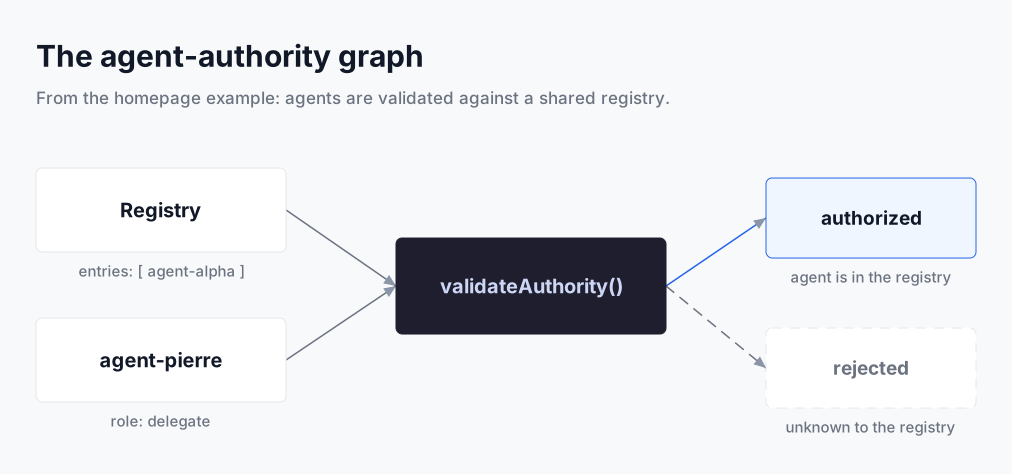
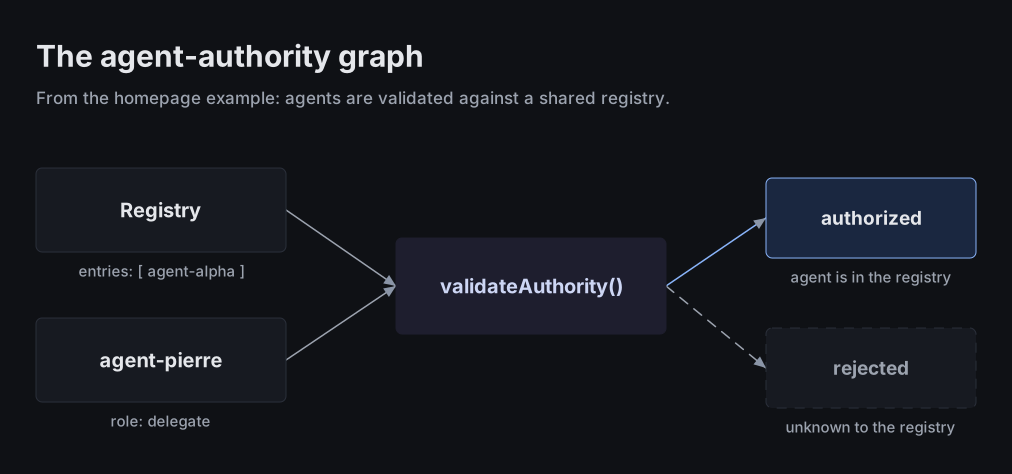
// Catch unauthorized spawns before they run:
const registry = {
  id: "reg-prod", name: "Prod Registry", governance: "authoritative",
  entries: [{ id: "agent-alpha", type: "agent" }],
};
validateAuthority({ agent: { id: "agent-pierre", label: "Pierre", role: "delegate" }, registry });
// { valid: false, errors: [{ code: "unauthorized_spawn", ... }] }
// jsontology reports; your orchestrator enforces.
Built-in schemas
Five schemas. One shared vocabulary.
Click any schema to explore its properties. Blue dots are required fields. Click object-type fields to expand nested properties.
$jsontology/agent
Agent
An AI agent with defined capabilities, roles, delegation authority, and trust boundaries.
authority: issuerdelegation: explicittrust: federated
idstring
Unique canonical identifier for this agent
labelstring
Human-readable name
rolestring
Functional role in a multi-agent system
enum: "orchestrator" | "specialist" | "observer" | "delegate" | "registry"
capabilitiesarray<string>
Capability identifiers this agent can perform
authority ▸object
Delegation and authority scope
trust ▸object
Trust assessment
disclosurestring
How this agent's identity is disclosed
enum: "public" | "private" | "federated"
required field optional field ▸ click object fields to expand
API reference
Two functions. Fully typed.
| Function | Returns | What it does |
|---|---|---|
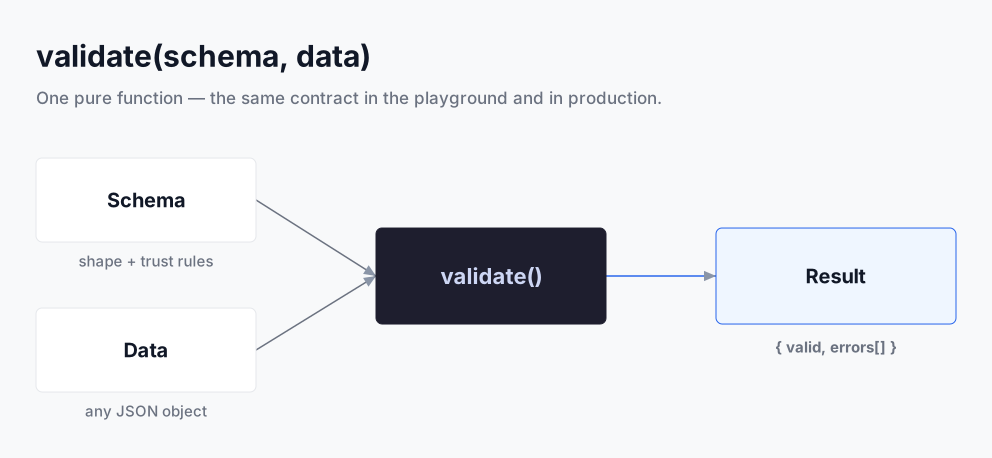
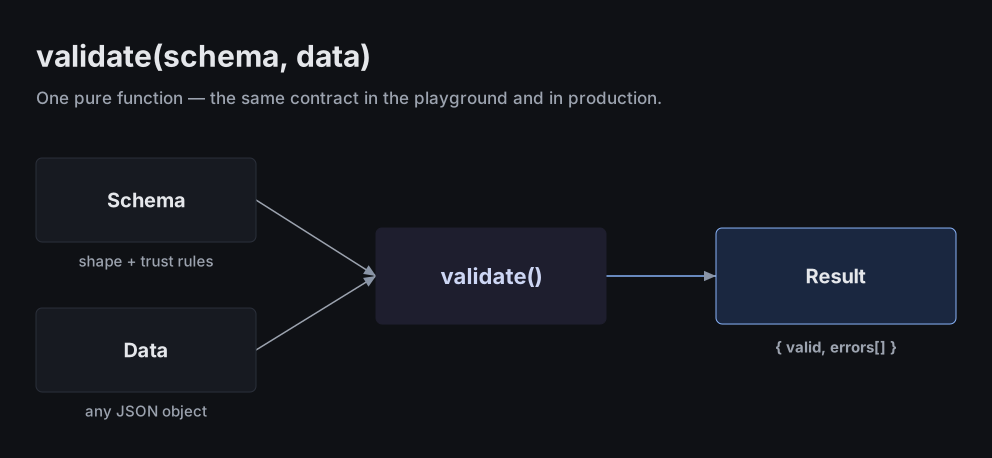
schemas.X.validate(data) | { valid, errors } | Validate against a built-in schema. Errors carry path, code, and message. |
validate(schema, data) | { valid, errors } | Validate any object against any schema. Same return shape as above. |
defineOntology(schema, rules?) | DefinedOntology | Define a typed, frozen schema with optional cross-field rules. Requires $id, title, description. Returns schema with bound .validate(). |
validateAuthority(req) | { valid, errors } | Validate a proposed agent spawn against a registry contract. Catches unauthorized agents and authority mismatches. |
Custom schemas
typescript
import { defineOntology } from "jsontology";
import type { Rule } from "jsontology";

const budgetRule: Rule = (data) =>
  (data.amount as number) > (data.limit as number)
    ? [{ path: "$.amount", code: "exceeds_limit", message: "amount exceeds limit" }]
    : [];

const HandoffSchema = defineOntology({
  $id: "my-app/handoff",
  title: "Agent Handoff",
  description: "Task delegation from one agent to another",
  type: "object",
  required: ["from", "to", "task"],
  properties: {
    from:  { type: "string" },
    to:    { type: "string" },
    task:  { type: "string" },
    ttl:   { type: "number", minimum: 0 },
  },
  $delegation: "explicit",
  $governance: "authoritative",
});

HandoffSchema.validate({ from: "a", to: "b", task: "summarise" });
// { valid: true, errors: [] }
Web4 vocabulary annotations
Annotations are metadata — they do not affect validation. They provide interoperability context for registries and agent systems.
| Field | Values | Meaning |
|---|---|---|
$authority | string | Who asserts this schema's authority |
$delegation | "explicit" | "implicit" | "none" | Delegation model for this schema type |
$trust | "public" | "private" | "federated" | Trust boundary for schema instances |
$governance | "authoritative" | "federated" | "consensus" | "open" | How schema entries are validated |
$registry | string | ID of the governing registry |
Shipping this to production?
Digital Solution Delivery designs and hardens jsontology-powered agent schemas — delegation contracts, registries, and validation pipelines — for teams putting multi-agent systems into production.